
LA River Bike Path Moves Closer to Construction After Metro Vote
This week, Metro approved a significant motion on the future of transportation in Los Angeles, bringing us one step closer to completing the main gap in the LA River Bike Path!
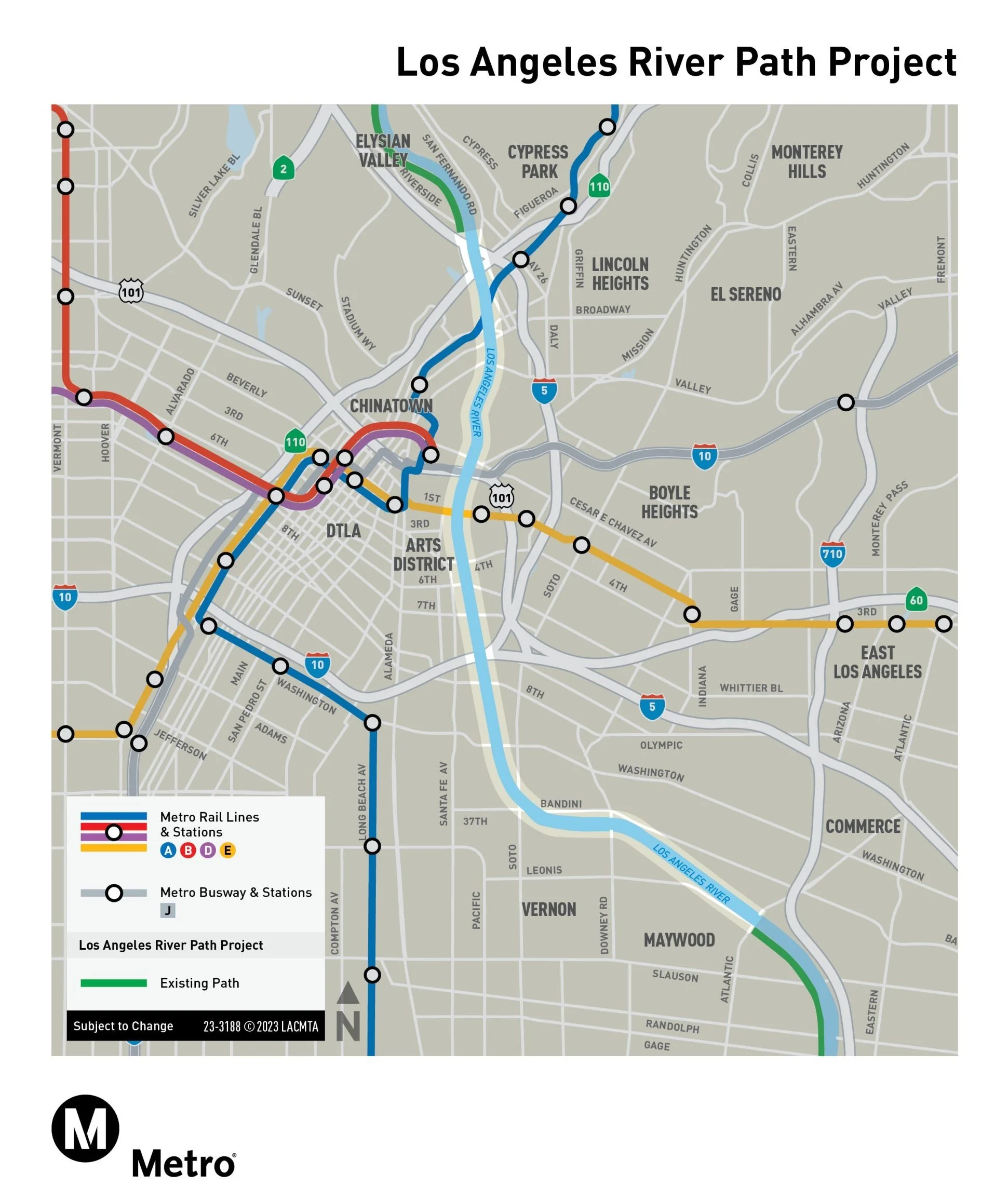
Map highlighting the 8.1-mile gap on the LA River Bike Path - Map created by L.A. Metro
Why is this So Important?
Completing the gap in the LA River Bike Path through DTLA would drastically transform how people move through Los Angeles County.
When completed, the LA River Bike Path would connect two world-class bike paths, creating a continuous 32-mile route from the San Fernando Valley to Long Beach.
We have the most beautiful weather, scenery, and nature in the world, but we cannot connect to it in a way that feels accessible and safe without finishing bike networks we’ve already started.
That’s why, for years, Streets Are For Everyone, alongside Move LA and Festival Trail, has advocated for closing the dangerous gap in the LA River Bike Path.
We have spoken at Metro Board meetings, organized community conversations, and gathered feedback from residents who rely on the river path to access their communities.
Currently, there is a dangerous eight-mile void through downtown LA, forcing cyclists and pedestrians entering DTLA off the river path and onto some of the city’s busiest and most dangerous streets. Every single day, children, commuters, and families put themselves in danger as they merge onto busy intersections and travel alongside speeding cars and trucks.
In the past six years alone, 83 people have suffered serious injuries in traffic collisions. Six of them lost their lives. These are our neighbors, our coworkers, our family members whose lives were permanently changed while simply trying to connect to their city.
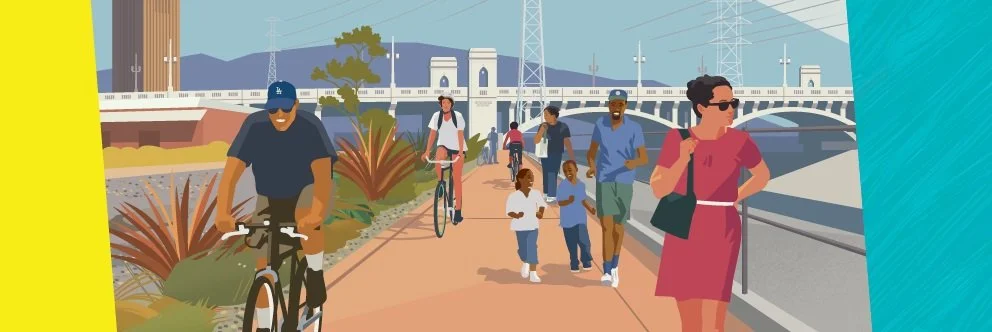
Illustration by: www.metro.net
Why has this Taken So Long?
Approximately 400 million dollars was secured in 2016 to close this gap. One would expect everything to start moving with so much money available to fund it, but 10 years later, little has moved.
One of the biggest obstacles for this project was determining who would ultimately oversee and maintain it. The proposed path spans multiple jurisdictions and requires coordination among Metro, the City of Los Angeles, the County of Los Angeles, the Los Angeles County Flood Control District, and the United States Army Corps of Engineers, as well as numerous transportation, public works, and community stakeholders.
With so many agencies involved, establishing a clear governance structure has delayed the project's construction.
The other barrier is Metro. While the money is sitting there, this is not a priority project for Metro compared with new heavy-rail or light-rail projects and bus rapid transit lanes. There have been discussions within Metro about whether bike paths should be under Metro's jurisdiction at all.
The last barrier is that the design currently proposed by Metro (the draft EIR is available for feedback) is incredibly overengineered and would cost nearly $1 billion to complete, assuming no delays or cost overruns. With only 40% of the current expensive option funded, the gap would never be fully closed.
A less expensive, faster, and easier-to-build in-channel route was explored back in 2016, but it was dropped because it would have meant the bike path couldn’t be used on days with significant rainfall (an average of 20 days a year).
How Does this Metro Vote Break Through the Barriers?
This week's motion is designed to address each of these three barriers.
The motion, introduced by Mayor Karen Bass and Supervisor Hilda Solis, directs Metro to work alongside local agencies to launch a Governance & Delivery Study to examine who should lead the project, how it should be built, how operations and maintenance will be managed, and what long-term funding sources can support the path once it is completed.
This motion includes exploring the possibility of establishing a Joint Powers Authority (JPA).
A JPA is an independent, legal entity created by an agreement between two or more public agencies (like cities, counties, or special districts). In California, JPAs can also include a non-profit member. JPAs are allowed to exercise shared powers to deliver services more efficiently jointly.
This JPA could take the LA River Bike Path project out from under Metro, review the existing and previous proposals, such as the in-channel option, and expedite the completion of the gap in the next few years, rather than decades or never.
Metro’s recent action does not approve final construction, but it does OFFICIALLY start the process, bringing all necessary agencies to the table to move the project closer to construction collaboratively.
For everyone who’s longed for a continuous LA River Bike Path, this might be the real momentum needed.